

Food and Beverage and the R&D Tax Credit
Small businesses in the Food and Beverage sector can significantly benefit from the R&D Tax Credit by offsetting costs associated with developing new recipes, improving production processes, or enhancing food safety. For startups with low or no income tax liability, the R&D tax credit payroll tax offset is particularly beneficial: it allows eligible companies to claim up to $500,000 per year against their payroll taxes. This can free up critical cash flow, allowing for further innovation, hiring, or expansion of operations, ultimately making it easier for small businesses in the food and beverage industry to grow and remain competitive.
What do we do?

Are you eligible?

Pass an Audit?

Founded in 1984 by J.W. Norris as Reed & Co., Swanson Reed has grown to become one of the world’s largest firms specializing in Research and Development (R&D) tax credit consulting. We boast numerous publications. Our AI software, TaxTrex, is a cutting-edge AI language model capable of preparing R&D tax credit claims in just 90 minutes. Our R&D tax audit insurance policy, creditARMOR, is one of the most cost-effective audit management products on the market.
If you have questions or need further assistance, call or email our CEO, Damian Smyth, at (000) 000-0000. Feel free to book a short call with one of our national R&D tax credit specialists at a time convenient for you.
Case Study: Food and Beverage Sector
Business Scenario
This case study exemplifies the application of key legislative requirements for eligible R&D activities, applied to relevant activities in the food and beverage sector.
Bryan Beef is a private producer of processed beef products for the food and retail industries in the United States. As part of the food and beverage sector, Bryan Beef constantly focuses on developing new products to remain competitive in the industry. It regularly conducts R&D activities to create new products related to food safety, cost reduction, organic/natural products, dietary guidelines, and sustainable resources.
To keep up with the times, Bryan Beef launched an R&D project with the primary business goal of producing certified organic beef products. To do this, Bryan Beef had to completely reinvent its production process.
Bryan Beef had never claimed the R&D tax credit before and believed its activities did not qualify. To be eligible, it had to meet four main criteria, known as the Four-Part Test. After meeting with a specialist, Bryan Beef realized it was eligible for the credit.
Deadline Calculator

Research Grants

Choose Your Industry
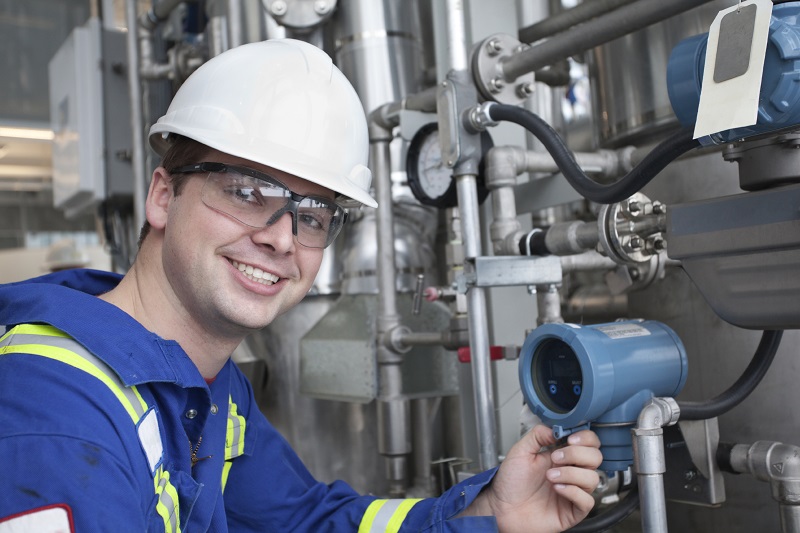
Bryan Beef’s Eligible R&D Activities
The R&D tax credit specialist helped Bryan Beef determine its qualifying R&D activities, many of which were part of the company’s daily operations. Bryan Beef’s Qualified Research Expenses (QREs) included:
- Development of new or improved product formulations to meet changing consumer preferences;
- Development of new packaging to extend product shelf life;
- Modifications to existing production processes to comply with new regulations;
- Development of production processes to accommodate new products or optimize processing;
- Automation of production functions to minimize product contamination;
- Continuous improvement projects aimed at reducing scrap, waste, and spoilage and/or conserving water and utilities; and
- Modifications to machinery layout to reduce production times and increase output.
Bryan Beef claimed the federal R&D tax credit and obtained more than $140,000 in credits. A sustainable methodology was also established to help the company identify, document, and substantiate eligible R&D projects and costs on an ongoing basis.
Live Webinar: The R&D Tax Credit in the Food and Beverage Sector
Duration: 60 Minutes
Learning objectives include:
- An overview of R&D Tax Credits
- Identifying Qualifying Research Activities
- Defining the 4-Part Test
- How to substantiate activities through documentation
- Identifying Qualifying Research Expenses
Cost: FREE
Knowledge Level: Basic*

Definition of Qualified Research
Qualified research consists of research activities with the intent to develop new or improved business components. A business component is defined as any product, process, technique, invention, formula, or computer software that the taxpayer intends to hold for sale, lease, license, or actual use in their trade or business.
The Four-Part Test
Activities eligible for the R&D Credit are described in the “Four-Part Test,” which must be met for the activity to qualify as R&D.
- Permitted Purpose: The purpose of the activity or project must be to create new (or improve existing) functionality, performance, reliability, or quality of a business component.
- Elimination of Uncertainty: The taxpayer must intend to discover information that eliminates uncertainty regarding the development or improvement of the business component. Uncertainty exists if the information available to the taxpayer does not establish the capability of development or improvement, the method of development or improvement, or the appropriate design of the business component.
- Process of Experimentation: The taxpayer must undertake a systematic process designed to evaluate one or more alternatives to achieve a result, where the capability or method to achieve that result, or the appropriate design of that result, is uncertain at the beginning of the taxpayer’s research activities.
- Technological Nature: The process of experimentation used to discover information must fundamentally rely on principles of the hard sciences such as physical or biological sciences, chemistry, engineering, or computer science.
What specific records and documentation did Bryan Beef keep?
Similar to any tax credit or deduction, Bryan Beef had to keep business records outlining what it did in its R&D activities, including experimental activities and documents to prove the work occurred systematically. Bryan Beef kept the following documentation as evidence:
- Project logs / lab notes
- Conceptual sketches
- Design drawings
- Photographs / videos of various construction / assembly / testing stages
- Prototypes
- Test protocols
- Results or analysis logs from tests / trials
- Tax invoices
By having these records on file, Bryan Beef confirmed it was ‘audit-ready’ — meaning that, in the event of an audit, it could present documentation illustrating the progression of its R&D activity, thus demonstrating its eligibility for R&D.
Choose your industry
Agriculture, Farming and Fishing


Automotive

Aviation

Biotechnology

Building and Construction

Robotics and Engineering

Fabrication

Film and Media

Food and Beverage

Lean Manufacturing

Machine Tool and Die

Manufacturing

Maritime and Boating

Mining

Natural Medicine

Oil and Gas

Pharmaceuticals and Life Sciences

Real Estate Development

Software & Artificial Intelligence

Textile, Clothing and Footwear

Theme Parks

Transportation
Water Conservation

Zoo and Wildlife


