

Manufacturing and the R&D Tax Credit
Small businesses in the manufacturing sector can significantly benefit from the Research and Development (R&D) tax credit, reducing their tax liability for developing or improving products, processes, or technologies. For startups with little to no income tax liability, the R&D tax credit payroll offset offers a valuable opportunity, allowing them to apply the credit against up to $500,000 in payroll taxes annually. This helps offset critical staffing costs, freeing up capital for further innovation and growth, even in early development stages.
What do we do?

Are you eligible?

Pass an Audit?

Founded in 1984 by J.W. Norris as Reed & Co., Swanson Reed has grown to become one of the world’s largest specialized Research and Development (R&D) tax credit consulting firms. We boast numerous publications. Our AI software, TaxTrex, is a cutting-edge AI language model capable of preparing R&D tax credit claims in just 90 minutes. Our R&D credit audit insurance policy, creditARMOR, is one of the most cost-effective audit management products on the market.
If you have questions or need further assistance, please call or email our CEO, Damian Smyth, at (000) 000-0000. Feel free to book a short conference call with one of our national R&D tax credit specialists at a time that suits you.
Case Study: Manufacturing Industry
Business Scenario
Wino Incorporated (Wino) specializes in wine cellar refrigeration. In 2012, a vineyard contacted Wino to create a solution to reduce cellar operating temperatures from 15°C (59℉) to 12°C (54℉).
A solution was devised to use cold liquid CO2 from a CO2 recovery plant, vaporizing the liquid and passing it through cooling units in the cellar to lower temperatures to 12°C.
To qualify for the Research and Experimentation Tax Credit, Wino needed to ensure its “qualified research” met four main criteria, known and developed by Congress as The Four-Part Test. After a self-assessment, Wino claimed the following experiments as R&D work.
Deadline Calculator

Research Grants

Choose Your Industry
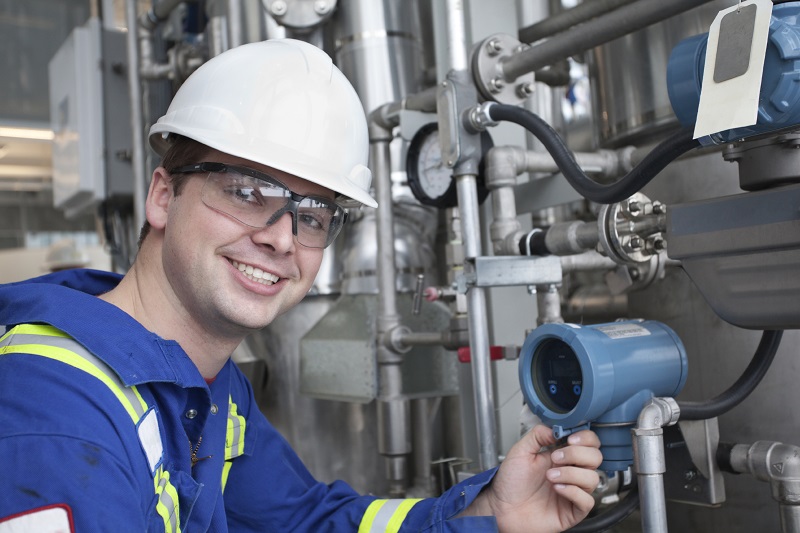
Wino’s Eligible R&D Activities
Design and development of a series of prototypes to achieve technical objectives and prove the hypothesis (project development and initial testing of the solution to reduce cellar temperatures via a CO2 system).
The hypothesis for this phase of Wino’s R&D project questioned the possibility of reducing cellar temperatures by approximately 3°C (5℉) through the use of CO2.
In an attempt to prove its hypothesis, Wino conducted the following R&D activities:
- Practical design via in-depth analysis of potential issues
- System design was constantly refined over a period of months to improve system performance
- Technical drawings and design calculations were updated as needed to incorporate changes and refinements
- On-site implementation of the solution for testing and further development
Wino demonstrated that the system was a failure, as too many variables outside its control did not allow the system to function consistently. With all these factors influencing performance, the system was too complicated for stable cellar operation.
Trials and data analysis to achieve reproducible results to a satisfactory standard and to test the hypothesis (testing and evaluation of the revised solution’s practical performance).
Although Wino failed to find a solution to lower the general temperature in the cellar, it was still able to claim the following testing and evaluation activities as R&S:
- A complete design change using CO2 as a conventional refrigerant was required to reduce cellar temperature.
- Redesign of the system as a standalone plant using two new compressors and a liquid CO2 recirculation pump to larger evaporators in the cellars.
- A new evaporator in each cellar was added to existing evaporators.
Background research to evaluate current knowledge gaps and determine feasibility (background research for designing a solution to reduce cellar temperatures).
Wino’s background research focused on identifying problems, designing a potential solution using CO2 recovery tanks, and collaborating with the client on project development. Project development included:
- Meetings with the client, presentation of typical designs, other system options, and commitment to provide refined designs.
- Internal design development and creation of sketches and calculations.
- Discussions with site operators regarding system practicality.
- Presentation of the design to the client for review and acceptance.
These background research activities were necessary because they contributed to identifying key elements of the research project, thus qualifying as R&S work.
Continuous analysis of customer or user feedback to improve prototype design (feedback-based R&S for the cellar temperature reduction solution via a CO2 system).
Wino conducted the following activities during its analysis:
- Development and modification to interpret experimental results/observations and draw conclusions that served as a starting point for developing new hypotheses; that is, solutions to observed inefficiencies or problems.
- Evaluation of client feedback to improve system design.
- Client inspection upon completion of the construction phase.
- Validation of design inputs during operation and testing of the new system.
These activities were necessary to evaluate the performance capabilities of the new design in the field and to improve any defects in the project.
Live Webinar: The R&D Tax Credit in the Manufacturing Industry
Duration: 60 Minutes
Learning objectives include:
- An overview of R&D Tax Credits
- Identifying Qualifying Research Activities
- Defining the 4-Part Test
- How to substantiate activities through documentation
- Identifying Qualifying Research Expenses
Cost: FREE
Knowledge Level: Basic*

Definition of Qualified Research
Qualified research consists of research activities aimed at developing new or improved business components. A business component is defined as any product, process, technique, invention, formula, or software that the taxpayer intends to hold for sale, lease, license, or actual use in the taxpayer’s trade or business.
The Four-Part Test
Activities eligible for the R&D Credit are described in the “Four-Part Test”, which must be satisfied for the activity to qualify as R&D.
- Permitted Purpose: The purpose of the activity or project must be to create new (or improve existing) functionality, performance, reliability, or quality of a business component.
- Elimination of Uncertainty: The taxpayer must intend to discover information that would eliminate uncertainty regarding the development or improvement of the business component. Uncertainty exists if the information available to the taxpayer does not establish the capability of development or improvement, the method of development or improvement, or the appropriateness of the business component’s design.
- Process of Experimentation: The taxpayer must engage in a systematic process designed to evaluate one or more alternatives to achieve a result where the capability or method to achieve that result, or the appropriate design of that result, is uncertain at the beginning of the taxpayer’s research activities.
- Technological Nature: The process of experimentation used to discover information must fundamentally rely on principles of hard sciences such as physical or biological sciences, chemistry, engineering, or computer science.
What specific records and documentation did Wino keep?
As with any tax credit or deduction, Wino had to keep business records describing its R&D activities, including experimental activities and documents to prove that the work proceeded in a systematic manner.
Wino retained the following documentation:
- Project progress (e.g., meeting notes, minutes, emails, reports)
- Conceptual sketches and technical drawings
- Photographs of completed models
- Test protocols
- Results or records of test analyses / trials
- Tax invoices
By having these documents on file, Wino confirmed it was “compliance ready”, meaning that if audited, it could present documentation to show the progression of its R&D work, ultimately proving its eligibility for the R&D credit.
Choose your industry
Agriculture, Farming and Fishing


Automotive

Aviation

Biotechnology

Building and Construction

Robotics and Engineering

Fabrication

Film and Media

Food and Beverage

Lean Manufacturing

Machine Tool and Die

Manufacturing

Maritime and Boating

Mining

Natural Medicine

Oil and Gas

Pharmaceuticals and Life Sciences

Real Estate Development

Software & Artificial Intelligence

Textile, Clothing and Footwear

Theme Parks

Transportation
Water Conservation

Zoo and Wildlife


