
Oil and Gas and the R&D Tax Credit
Small businesses in the Oil and Gas sector can significantly benefit from the Research and Development tax credit by recovering costs associated with the development of new technologies, the improvement of drilling methods, or the enhancement of environmental safety. For startups with low or no income tax liability, the R&D payroll tax offset allows them to apply the credit against payroll taxes, helping to reduce one of their largest expenses. This incentive frees up cash flow, allowing continuous investment in innovation and growth even in early operational stages.
What do we do?

Are you eligible?

Pass an Audit?

Founded in 1984 by J.W. Norris under the name Reed & Co., Swanson Reed has grown to become one of the world’s largest firms specializing in Research and Development (R&S) tax credit consulting. We boast numerous publications. Our artificial intelligence software, TaxTrex, is a state-of-the-art AI language model capable of preparing R&D tax credit claims in just 90 minutes. Our R&D credit audit insurance policy, creditARMOR, is one of the most cost-effective audit management products on the market.
If you have any questions or require further assistance, please call or send an email to our CEO, Damian Smyth, at (000) 000-0000. Feel free to book a brief conference call with one of our national R&D tax credit specialists at a time convenient for you.
Case Study: Oil and Gas
Business Scenario
This case study exemplifies the application of key legislative requirements for eligible R&D activities, applied to relevant activities in the oil and gas sector.
SafeMark Gas Experts (SafeMark) has been involved in workplace gas detection for over 40 years and offers safety solutions to American infrastructure and resource companies. To maintain its client’s trust and its reputation as an industry leader, SafeMark regularly conducts R&S activities.
In March 2013, SafeMark identified the need for a protective device that would detect flammable materials, which led to the launch of the Flame Guard Project in April 2013. The project hypothesis was that SafeMark could design and develop a tested protective device with innovative features to detect flammable materials better than what currently existed on the market.
To qualify for the Research and Experimentation Tax Credit, SafeMark had to ensure that its “qualified research” met four main criteria, known and developed by Congress as the Four-Part Test. After a self-assessment, SafeMark declared the following experiments as R&S activities.
Deadline Calculator

Research Grants

Choose Your Industry
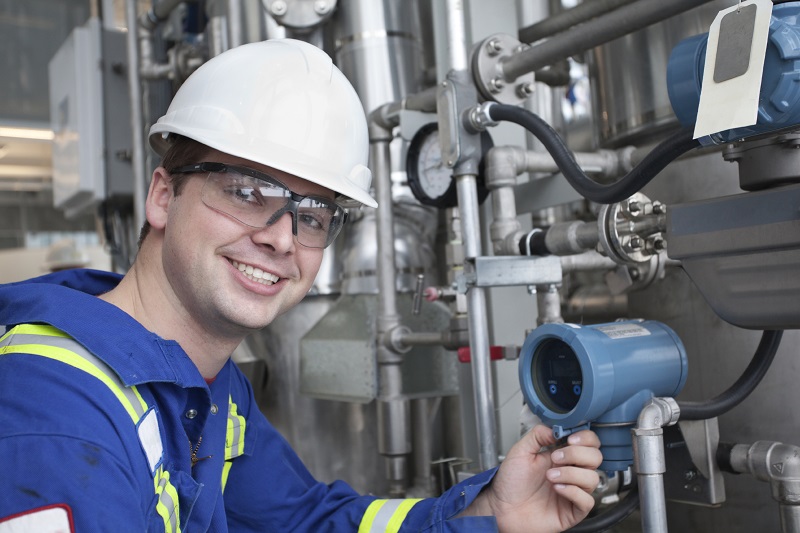
SafeMark’s Eligible R&D Activities
Design and development of a series of prototypes to achieve technical objectives (design of the tested protective device).
SafeMark’s hypothesis for its experiment asked whether it was feasible to design a tested protective device to detect flammable materials that was easier to use in the field and reduced operating costs for customers.
The experiments conducted by SafeMark in the design phase consisted primarily of computer modeling, conceptual engineering drawings, and mathematical calculations. These experiments could only be proven effective or ineffective in the prototype development and testing phase. Following experiments in that phase, during which the product was built and tested in various applications, the design was modified and re-tested until the desired result was achieved.
Background research to assess current knowledge gaps and determine feasibility (background research for the tested protective device).
SafeMark’s eligible R&S activities during this experimentation phase included:
- Literature research and review, including maintaining up-to-date knowledge of relevant certifications and standards.
- Consultation with industry professionals and potential customers to determine the level of interest and commercial feasibility of the product.
- Preliminary review of equipment and resources regarding capacity, performance, and suitability for the project.
- Consultation with key component/part/assembly suppliers to determine factors they considered important in the design and to understand how the design should be structured accordingly.
The background research conducted by SafeMark was directly related to the main goal of designing a protective device capable of detecting flammable materials, thus qualifying as R&S.
Continuous analysis of customer or user feedback to improve prototype design (feedback on the tested protective device).
Feedback on the tested protective device included:
- Continuous analysis and testing to improve project efficiency and safety.
- Continuous development and modification to interpret experimental results and draw conclusions that served as starting points for the development of new hypotheses.
- Commercial analysis and functionality review.
This feedback was necessary to assess the performance capabilities of the new design in the field and to improve any flaws in the design. There was a direct correlation between the feedback and the design process of the tested protective device, making it an eligible R&S activity.
Live Webinar: The R&D Tax Credit in the Oil and Gas, and Non-Renewable Power Generation Sector
Duration: 60 Minutes
Learning objectives include:
- An overview of R&D Tax Credits
- Identifying Qualifying Research Activities
- Defining the 4-Part Test
- How to substantiate activities through documentation
- Identifying Qualifying Research Expenses
Cost: FREE
Knowledge Level: Basic*

Definition of Qualified Research
Qualified research consists of research activities with the intent of developing new or improved business components. A business component is defined as any product, process, technique, invention, formula, or software that the taxpayer intends to hold for sale, lease, license, or actual use in the taxpayer’s trade or business.
The Four-Part Test
Activities eligible for the R&D Credit are described in the “Four-Part Test,” which must be satisfied for the activity to qualify as R&D.
- Permitted Purpose: The purpose of the activity or project must be to create new (or improve existing) functionality, performance, reliability, or quality of a business component.
- Elimination of Uncertainty: The taxpayer must intend to discover information that would eliminate uncertainty regarding the development or improvement of the business component. Uncertainty exists if the information available to the taxpayer does not establish the capability of development or improvement, the method of development or improvement, or the appropriateness of the design of the business component.
- Process of Experimentation: The taxpayer must undertake a systematic process designed to evaluate one or more alternatives to achieve a result where the capability or method to achieve that result, or the appropriate design of that result, is uncertain at the beginning of the taxpayer’s research activities.
- Technological Nature: The process of experimentation used to discover information must be fundamentally based on principles of the hard sciences such as physical or biological sciences, chemistry, engineering, or computer science.
What specific records and documentation did SafeMark keep?
Similar to any tax credit or deduction, SafeMark had to keep documents describing what it did in its R&S activities, including experimental activities and business records to prove that the work was conducted systematically.
SafeMark kept the following documentation:
- Background research
- Meeting notes or progress reports, including issues and internal project management updates
- Conceptual sketches
- Design drawings
- Emails
Having these records on file, SafeMark confirmed it was “compliance ready,” meaning that if it were subjected to an audit, it could present the documentation to show the progression of its R&S activity, ultimately proving its eligibility for the R&S credit.
Choose your industry
Agriculture, Farming and Fishing


Automotive

Aviation

Biotechnology

Building and Construction

Robotics and Engineering

Fabrication

Film and Media

Food and Beverage

Lean Manufacturing

Machine Tool and Die

Manufacturing

Maritime and Boating

Mining

Natural Medicine

Oil and Gas

Pharmaceuticals and Life Sciences

Real Estate Development

Software & Artificial Intelligence

Textile, Clothing and Footwear

Theme Parks

Transportation
Water Conservation

Zoo and Wildlife


